
The Future of News: Bleeding Business, Shifting Trust, and the AI Reckoning
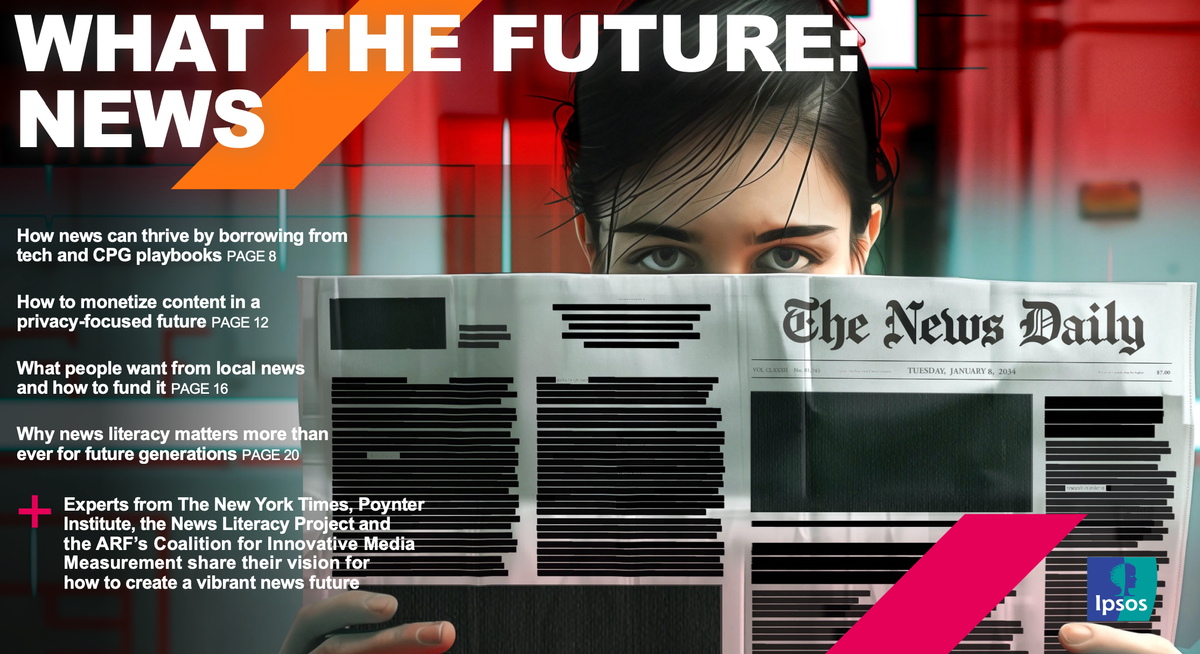
The Ipsos "What the Future: News" report lays bare the harsh reality facing journalism: shrinking newsrooms, declining trust, and an uncertain business model. But beyond the doom and gloom, it also sketches a roadmap for news to survive—and even thrive—by borrowing from other industries and adapting to the AI era.
Key Findings:
1. News is Collapsing, But the Demand Remains
- 64% of Americans grew up in a household that received a physical newspaper. Today, that number has cratered.
- The Washington Post reports that newspapers have lost 77% of their jobs in the past two decades—the steepest decline of any industry tracked by the Bureau of Labor Statistics.
- Despite this, 69% of people say staying informed is crucial to being a productive citizen. The gap between demand and supply is widening.
2. Trust is Fracturing—And So is the Business Model
- 68% believe the media cares more about stirring emotions than reporting neutrally.
- 59% say news is too biased to be useful.
- The Ipsos Care-o-Meter shows that people care deeply about issues like inflation and climate change—but aren’t sure where to turn for reliable coverage.
- People want news, but they don’t want to pay for it. 62% say they only read free news, leading to a race-to-the-bottom for ad-driven revenue models.
3. The AI Dilemma: Efficiency vs. Trust
- AI-generated journalism is already here. Automated game recaps, financial reports, and even entire news summaries are being written by AI.
- While this can expand coverage, it raises trust issues. Will people trust an AI newscaster? What happens when AI-generated disinformation is indistinguishable from real reporting?
- AI-driven personalization could either help people escape news bubbles or trap them in more sophisticated echo chambers.
4. Monetization in a Privacy-First World
- With third-party cookies on their way out, media outlets are scrambling to find alternative revenue streams.
- Successful models include subscription-based content (e.g., The New York Times' hybrid approach), live events, and premium offerings like games and crosswords.
- Younger audiences are more willing to pay for news—but expect a tangible value exchange beyond just access to articles.
What Needs to Change?
- Borrow from CPG and Tech: News organizations need to think more like consumer brands—creating multiple revenue streams, fostering loyalty, and personalizing content intelligently.
- Fix the Trust Crisis: Clearer transparency around how journalism works, better engagement with audiences, and a commitment to factual reporting can help rebuild trust.
- AI is a Tool, Not a Savior: If used properly, AI can free up journalists for deeper investigative work. If misused, it could accelerate misinformation and further erode trust.
- Local News Needs a Lifeline: The disappearance of local journalism leads to lower civic engagement, higher corruption, and increased polarization. Funding models that support local reporting are critical.
The Bottom Line
News isn’t dying—it’s just being gutted and reassembled in real-time. The question is whether the end product will serve democracy or undermine it further.
Read the full Ipsos "What the Future: News" report here: https://www.ipsos.com/en-us/future